
In the fast-evolving world of mobile app development, businesses and developers are constantly searching for efficient solutions to create high-quality applications that run seamlessly across multiple platforms. Flutter, Google's open-source UI toolkit, has emerged as a game-changer in this space. In 2024, Flutter remains the top choice for cross-platform app development, offering unparalleled benefits for businesses and developers alike.
This article explores why Flutter is the go-to framework for cross-platform development and how it can help businesses deliver engaging and performance-driven applications.
What Is Flutter?
Flutter is a UI toolkit developed by Google that allows developers to build natively compiled applications for mobile (iOS, Android), web, and desktop platforms from a single codebase. Since its launch in 2017, Flutter has gained immense popularity due to its rich feature set, robust performance, and extensive support from Google and the developer community.
Key Benefits of Flutter in 2024
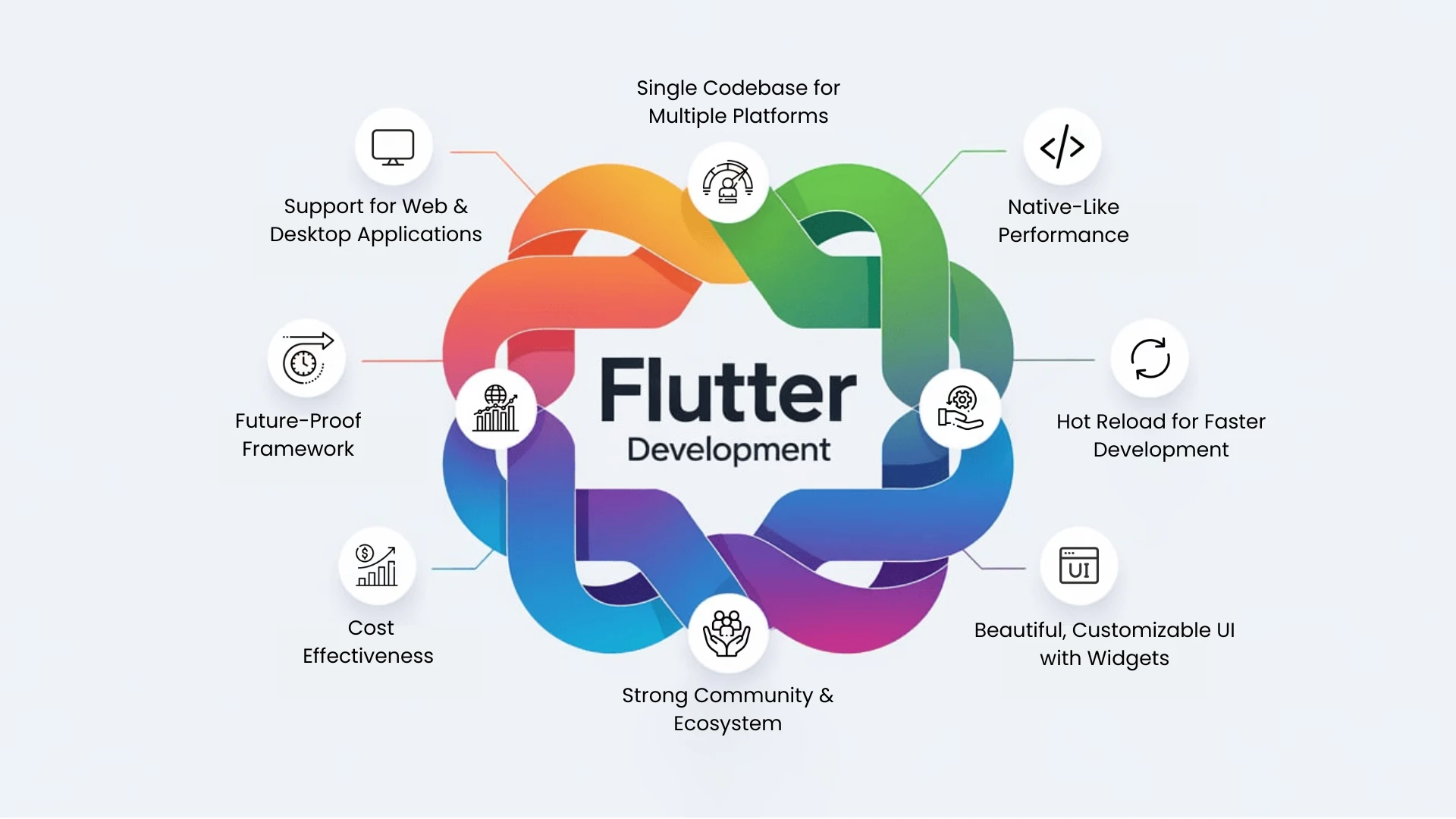
Single Codebase for Multiple Platforms
Flutter enables developers to write one codebase that works seamlessly across iOS, Android, web, and desktop platforms. This reduces development time, effort, and costs significantly, making it a highly efficient solution for businesses looking to target multiple platforms simultaneously.
Native-Like Performance
Unlike other cross-platform frameworks that rely on WebView or JavaScript, Flutter compiles directly to native ARM code. This ensures high performance and smooth animations, delivering an experience that feels truly native to the end-user.
Hot Reload for Faster Development
Flutter's "hot reload" feature allows developers to see code changes in real time without restarting the entire application. This accelerates the development process, enhances productivity, and allows for quicker iteration of features and UI adjustments.
Beautiful, Customizable UI with Widgets
Flutter offers a rich library of customizable widgets that adhere to Material Design and Cupertino standards. These widgets allow developers to create stunning, responsive user interfaces that align with the latest design trends and ensure a consistent look and feel across platforms.
Strong Community and Ecosystem
Flutter boasts a large, active developer community and a growing ecosystem of plugins and packages. This support makes it easier to integrate third-party tools, solve issues, and stay updated with the latest advancements.
Cost-Effectiveness
By using a single codebase for multiple platforms, businesses can save significantly on development and maintenance costs. Flutter also reduces the need for separate teams to manage iOS and Android development, further driving down expenses.
Support for Web and Desktop Applications
Flutter is no longer limited to mobile development. With its growing capabilities for web and desktop apps, it provides businesses with a unified solution to create applications for a broader audience.
Future-Proof Framework
Backed by Google, Flutter continues to receive regular updates and improvements. In 2024, features like better web support, faster rendering engines, and integration with cutting-edge technologies make Flutter a future-ready choice.
Why Businesses Choose Flutter in 2024
Faster Time-to-Market
In competitive industries, getting your app to market quickly is crucial. Flutter's streamlined development process ensures faster delivery without compromising quality.
Consistent Branding Across Platforms
Flutter makes it easy to maintain consistent branding and user experiences across platforms, ensuring your app aligns with your brand identity.
Scalability and Maintenance
With Flutter, maintaining and updating apps is simpler and more efficient. A single update can be deployed across all platforms, saving time and resources.
Ideal for MVP Development
For startups and businesses looking to test their ideas, Flutter is perfect for creating Minimum Viable Products (MVPs). It allows rapid prototyping and quick iteration based on user feedback.
Real-World Examples of Flutter Success
Google Ads
Google Ads uses Flutter to deliver a consistent, high-performance experience across devices, helping advertisers manage campaigns effectively.
Alibaba
The e-commerce giant Alibaba chose Flutter to build a robust, visually appealing mobile application that works flawlessly across platforms.
Reflectly
This mental health app leverages Flutter to create a beautiful, intuitive user interface that offers a great experience on both iOS and Android.
Flutter vs. Other Cross-Platform Frameworks
| Feature | Flutter | React Native | Xamarin |
|---|---|---|---|
| Codebase | Single for all platforms | Single for mobile only | Single for mobile, web, desktop |
| UI Performance | Near-native | Good, but depends on bridges | Good, but slower on updates |
| Development Speed | Fast with hot reload | Slower than Flutter | Slower than Flutter |
| Community Support | Large and growing | Established, but limited | Smaller, niche-focused |
| Cost-Effectiveness | High | Moderate | Moderate |
Conclusion
Flutter continues to dominate the cross-platform app development landscape in 2024. Its unique combination of high performance, beautiful UIs, and cost-effectiveness makes it the perfect choice for businesses aiming to deliver top-quality applications to their users.
Whether you're a startup looking to build an MVP or an enterprise seeking a scalable solution, Flutter offers the tools and capabilities to turn your vision into reality. By choosing Flutter, you're not just investing in app development—you’re investing in innovation, efficiency, and long-term success.
If you're ready to develop a cross-platform app that stands out, contact us today to see how we can bring your ideas to life with Flutter!