- 01 January, 2025
- Dinesh Sailor
Mobile App Development Web Development AI & ChatGPT Development DevOps
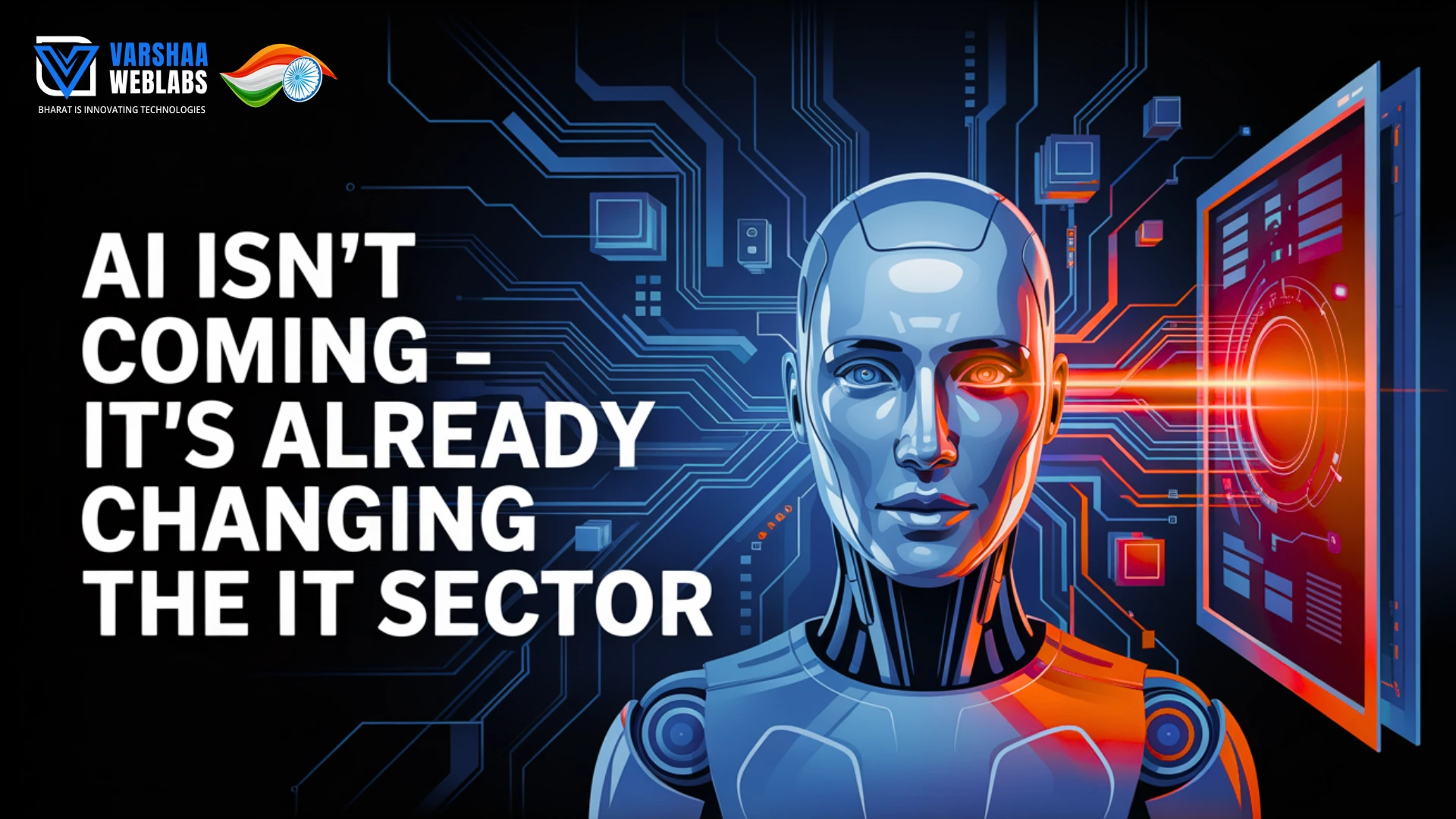
Artificial Intelligence (AI) has evolved beyond a buzzword; it's now a cornerstone of modern software development. At Varshaa Weblabs, we're at the forefront of integrating AI throughout the entire software development lifecycle. From generating intelligent code to automating testing, creating behavior-driven dashboards, and enabling smart customer interactions, AI is transforming how we build, deploy, and maintain software.
In this article, we delve into the profound impact AI is having on custom software development and explore why businesses today need more than just feature-rich applications — they need intelligent, adaptive systems built from the ground up.
The Shift from Traditional to Intelligent Software
Traditionally, software development was a linear process: planning, coding, testing, deployment, and maintenance. Each phase was manually driven, with developers focusing primarily on building functional features. But as technology advances, so do customer expectations. Businesses need software that not only works but anticipates needs, adapts to changes, and continuously improves over time.
This is where AI steps in. AI-powered tools can now assist in every phase of the software lifecycle, enhancing both efficiency and the quality of the final product. By embedding intelligence into every stage of development, AI is fundamentally changing the way we think about and create software.
AI in Code Generation: Writing Smarter Code Faster
One of the most game-changing applications of AI in software development is intelligent code generation. AI-driven platforms can now automatically write code based on high-level requirements, significantly reducing the time developers spend on repetitive tasks. These tools use machine learning algorithms to learn from vast codebases, recognizing patterns and offering developers smart suggestions for code snippets, improving both speed and accuracy.
This doesn't mean developers are being replaced — far from it. AI augments their capabilities, allowing them to focus on more complex, high-level tasks while automating routine coding. As a result, projects move faster, and developers are freed from the drudgery of writing boilerplate code.
AI-Powered Testing: Automation for Quality Assurance
Automated testing has long been an industry standard, but AI is taking it to the next level. Traditional testing tools often rely on predefined scripts and static test cases. AI-powered testing solutions, on the other hand, can analyze software in a more dynamic way, identifying patterns and predicting potential issues before they arise.
With AI, testing can be more comprehensive, covering edge cases and identifying vulnerabilities that human testers might miss. The AI can also continuously learn from past tests and adapt its strategies over time, ensuring the software remains bug-free as it evolves.
Behavior-Driven Dashboards: A Smarter Way to Visualize Data
In today's data-driven world, businesses need more than just numbers on a screen. They need intelligent dashboards that can turn raw data into actionable insights. AI-powered behavior-driven dashboards are revolutionizing how businesses interpret data, providing real-time insights that are automatically tailored to the user's behavior and needs.
Rather than static reports, these dashboards evolve based on user interactions, adapting to trends and preferences to deliver highly relevant, personalized information. This means stakeholders can make smarter, faster decisions, based on insights that are continuously updated in real-time.
AI in Customer Interactions: Enhancing User Experience
In the age of digital transformation, user experience (UX) is paramount. AI is helping businesses take their customer interactions to the next level, whether through chatbots, virtual assistants, or predictive support systems. These AI-powered solutions can understand and respond to customer queries in real-time, offering personalized experiences that enhance engagement.
By leveraging natural language processing (NLP) and machine learning, AI can understand user intent, provide contextually relevant responses, and even anticipate customer needs before they arise. This leads to smoother, more efficient interactions and, ultimately, a better customer experience.
AI-Driven Software: Intelligence, Not Just Features
As we look to the future of software development, it's clear that AI isn't just a tool to streamline processes; it's a fundamental part of how software is conceived, created, and continuously improved. At Varshaa Weblabs, we understand that businesses need more than just feature-rich applications — they need software that is intelligent, adaptable, and capable of evolving with the needs of the business and its users.
The future of custom software is not just about adding more features, but about embedding intelligence throughout the development process. By integrating AI, businesses can create software that learns, evolves, and grows smarter over time, providing both a competitive advantage and a more engaging experience for their users.
Conclusion: The AI Advantage in Custom Software Development
AI is no longer a luxury — it's an essential component of next-generation software. From intelligent code generation and automated testing to advanced dashboards and smarter customer interactions, AI is helping businesses build software that is more efficient, more responsive, and more adaptive to the ever-changing demands of the market.
At Varshaa Weblabs, we believe that the future of software development lies in the intelligent integration of AI. By weaving AI into every stage of the development lifecycle, we're not just creating applications — we're creating software that thinks, learns, and grows alongside the businesses that use it.
In the evolving world of IT, AI isn't just an add-on — it's the foundation of the next generation of software.